My Science Glossary
My Science Glossary
Hi, my name is Racha Hamade. I live in Montreal. I have been studying Sciences for 2 years at Ahuntsic College. My field of study is Natural Science. Natural Science is empirical evidence based on observations and experiments, involving the description, prediction and understanding of natural phenomena. The glossary I made may be useful for students already studying in this field, for the new students of research or for those who are interested in knowing more. Each word in this glossary is relates to all the notions of sciences that people will study. By learning the meaning of these words, you could learn a lot of this field and understand much better.
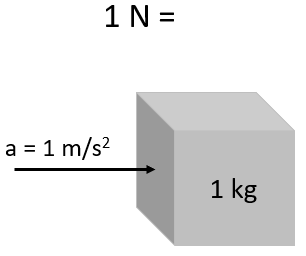
- newton
- noun
- The newton is the Standard International ( SI ) unit of force. In physics and engineering documentation, the term newton(s) is usually abbreviated N
- Example: A free body diagram of each link is produced by applying newton's Second Law of physics to identify the forces and torques acting on the link.
- fr: Newton
- energy
- noun
- Power derived from the utilization of physical or chemical resources, especially to provide light and heat or to work machines.
- Example: He interpreted this idea; that electric oscillators in the atom could only absorb and emit discrete packets of energy of certain sizes later called 'quanta'.
- fr: énergie

- anatomy
- noun
- The branch of science concerned with the bodily structure of humans, animals, and other living organisms, especially as revealed by dissection and the separation of parts.
- Example: The symptoms she was experiencing were explained to her, in terms of the anatomy of the hand and reasons for her symptoms.
- fr: anatomie

- disease
- noun
- A disorder of structure or function in a human, animal, or plant, especially one that produces specific signs or symptoms or that affects a specific location and is not simply a direct result of physical injury.
- Example: In medicine the polymerase chain reaction can be used to detect small amounts of nucleic acid, as in the diagnosis of disease.
- fr: maladie
- organism
- noun
- A complex structure of interdependent and subordinate elements whose relations and properties are largely determined by their function in the whole.
- Example: Genetic modification involves removing a desired gene from one organism and joining the gene onto a plasmid.
- fr: organisme
- germ
- noun
- A microorganism, especially one which causes disease.
- Example: Germ cells can also mutate and so the individual will not be affected by the mutation but any offspring are likely to be.
- fr: germe

- cell
- noun
- The smallest structural and functional unit of an organism, typically microscopic and consisting of cytoplasm and a nucleus enclosed in a membrane. Microscopic organisms typically consist of a single cell, which is either eukaryotic or prokaryotic.
- Example: For example DNA is about 2nm wide and in contrast a red blood cell is 7000nm across.
- fr: cellule

- immune system
- noun
- A complex network of cells and proteins that defends the body against infectio.
- Example: Thereby, phytochemicals can inactivate cancer-causing substances, stimulate the immune system, protect the heart from disease, and help prevent cataracts.
- fr: système immunitaire
- iron
- noun
- A strong, hard magnetic silvery-gray metal, the chemical element of atomic number 26, much used as a material for construction and manufacturing, especially in the form of steel.
- Example: The Indians in North America used copper and bronze but their only sources of iron were fragments found in meteors.
- fr: fer

- element
- noun
- Each of more than one hundred substances that cannot be chemically interconverted or broken down into simpler substances and are primary constituents of matter. Each element is distinguished by its atomic number, i.e. the number of protons in the nuclei of its atoms.
- Example: Which is when one element is partly or completely substituted for another, this occurs in some metal alloys.
- fr: élément

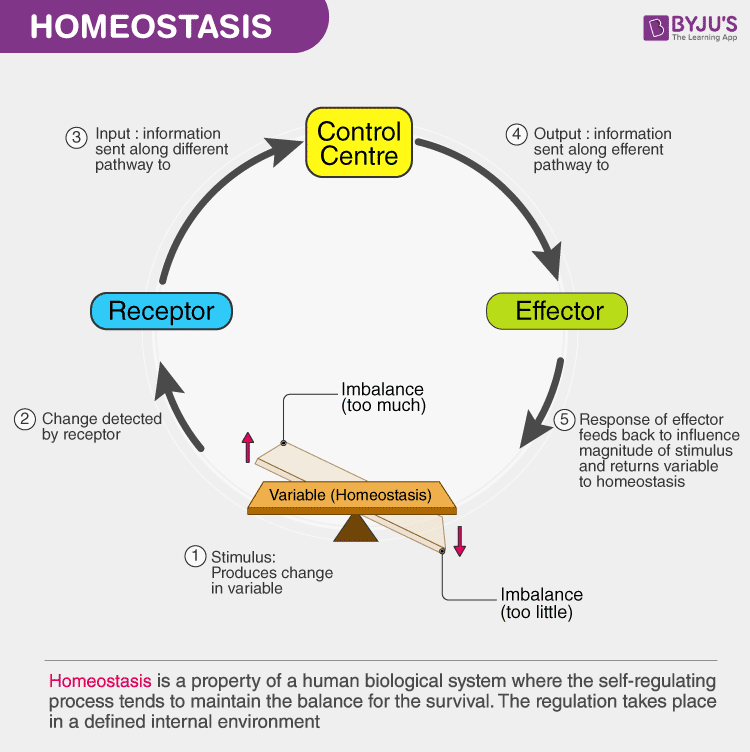
- homeostasis
- noun
- The tendency toward a relatively stable equilibrium between interdependent elements, especially as maintained by physiological processes.
- Example: The oxygen content of the blood is therefore increased and so this causes a decrease in the release of EPO, and homeostasis is maintained.
- fr: homéostasie
- order
- noun
- A taxonomic rank used in the classification of organisms and recognized by the nomenclature codes.
- Example: For plants, Linnaeus' orders in the Systema Naturae and the Species Plantarum were strictly artificial, introduced to subdivide the artificial classes into more comprehensible smaller groups.
- fr: ordre

- organ
- noun
- A part of an organism that is typically self-contained and has a specific vital function, such as the heart or liver in humans.
- Example: There is a risk that recurrent alcohol abuse will lead to alcoholic liver disease in the grafted organ and the additional problem of non-compliance with immunosuppression.
- fr: organe
- acidity
- noun
- The level of acid in substances such as water, soil, or wine.
- Example: Results Preperation of Standard sodium hydroxide solution Determination of total acidity of vinegar Calculations Potassium hydrogen phthalate is a primary standard.
- fr: acidité

- bone
- noun
- Any of the pieces of hard whitish tissue making up the skeleton in humans and other vertebrates.
- Example: These minerals are found in bone and are vital to maintain good bone health and reduce the risk of osteoporosis.
- fr: os
- dna
- noun
- A self-replicating material that is present in nearly all living organisms as the main constituent of chromosomes. It is the carrier of genetic information.
- Example: Free radicals therefore have the potential to cause oxidative damage to the body's dna, cells and tissues.
- fr: adn (acide désoxyribonucléique)
- rna
- noun
- Ribonucleic acid, a nucleic acid present in all living cells. Its principal role is to act as a messenger carrying instructions from DNA for controlling the synthesis of proteins, although in some viruses RNA rather than DNA carries the genetic information.
- Example: In biology the process is used in the analysis of messenger rna, as well as the amplification of DNA fragments for analysis.
- fr: ARN (acide ribonucléique)
- analysis
- noun
- Detailed examination of the elements or structure of something.
- Example: The BAWE corpus developers (contact: BAWE warwick.ac.uk) are informed of all projects, dissertations, theses, presentations or publications arising from analysis of the corpus.
- fr: analyse

- electron
- noun
- A stable subatomic particle with a charge of negative electricity, found in all atoms and acting as the primary carrier of electricity in solids.
- Example: Rutherford soon found Beta radiation to be electrons; alpha radiation was something rather different, it has a mass four times that of hydrogen and a charge double that of the electron but positive.
- fr: électron

- laboratory
- noun
- A room or building equipped for scientific experiments, research, or teaching, or for the manufacture of drugs or chemicals.
- Example: Differentials for the diffuse distribution of scale seen here are: Seborrhoeic dermatitis Atopic dermatitis Psoriasis Tinea capitis is however such a widespread infection in children that it should remain the most likely diagnosis in this case until dismissed by negative mycology on laboratory testing.
- fr: laboratoire
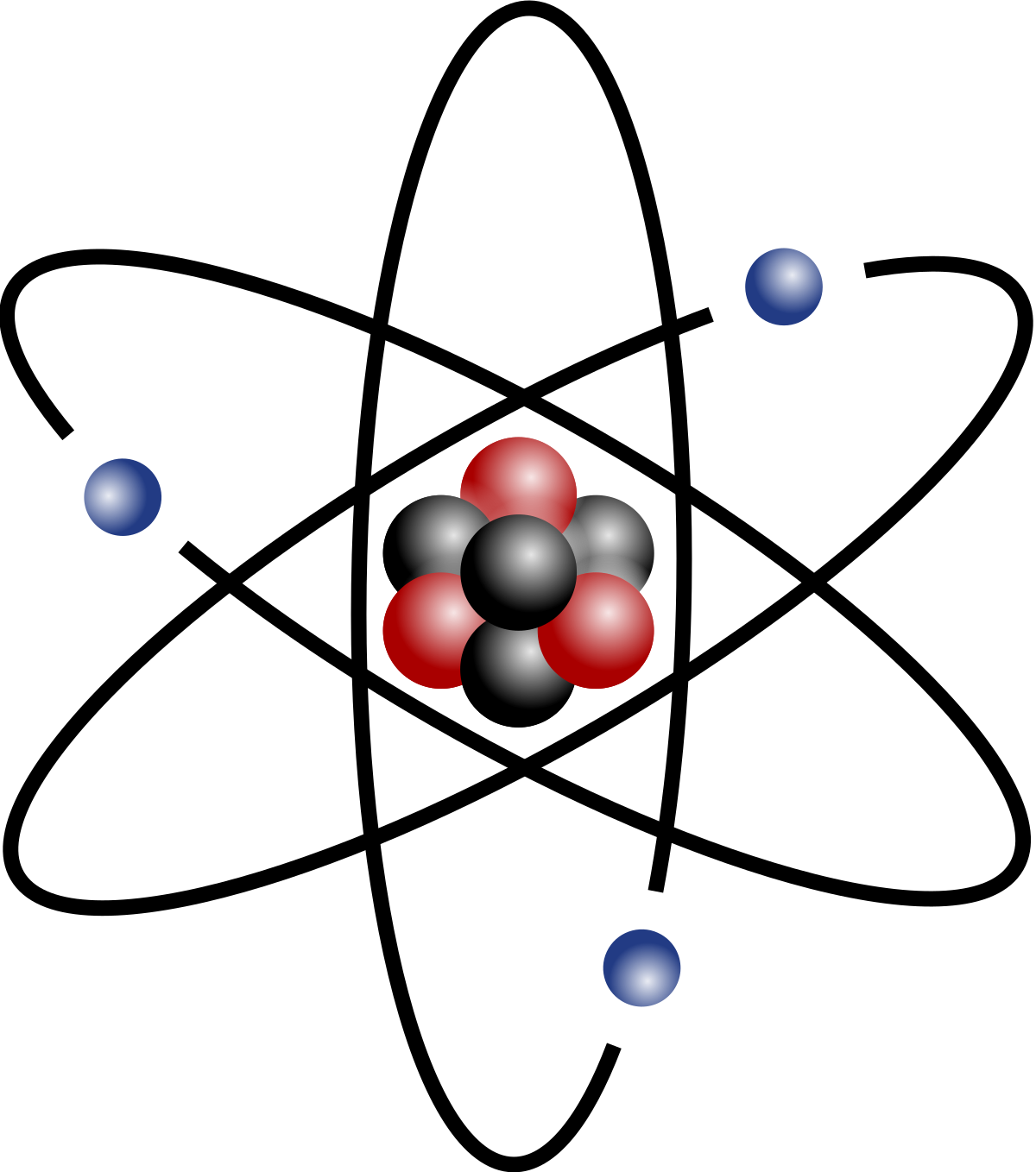
- atom
- noun
- The basic unit of a chemical element.
- Example: The molecules within this simulation are modelled as a collection of 'atoms', where each atom represents a chemically and spatially functional group within the real molecule.
- fr: atome